
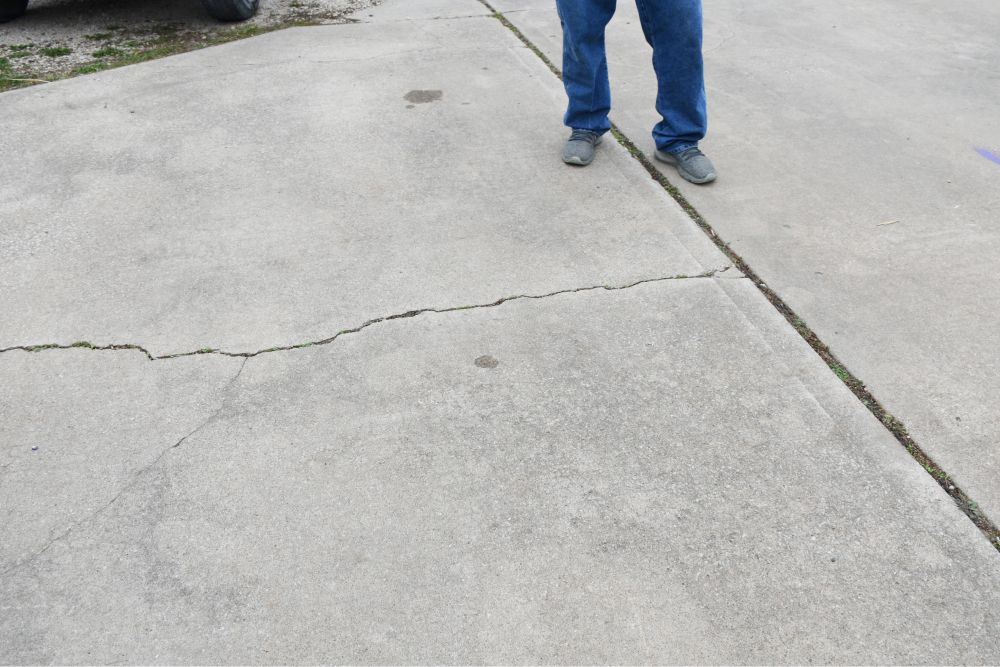
A concrete driveway takes a beating every day. Cars roll over it, sun bakes it, rain soaks it, and winter freezes it. Most homeowners do not notice the damage until it becomes hard to ignore. Catching the early warning signs can save you from a much bigger repair bill later.

This guide walks through the most common signs of driveway damage, what causes them, and when it is time to call in help.

Why Driveway Damage Rarely Stays Small

Concrete does not fail overnight. A small crack today can turn into a spreading network of cracks within a year. Moisture gets into the gaps, freezes, expands, and pushes the crack wider. This cycle repeats with every freeze-thaw season.

Soil settlement underneath the slab adds to the problem. As the ground shifts, the concrete above it loses even support. This is often what starts the chain reaction that ends in costly structural damage.

Cracks That Signal More Than Cosmetic Wear

Not every crack means trouble. But some patterns tell you the driveway needs attention now rather than later.

Hairline Cracks vs Structural Cracks

Hairline cracks are thin, shallow, and usually a normal part of concrete curing. They rarely need repair right away. Structural cracks are wider, often more than a quarter inch, and may run deep into the slab. These let water in and weaken the base over time.

If a crack has a noticeable gap or you can see it shifting between seasons, it has moved past cosmetic and into structural territory. That is the point where professional concrete driveway repair becomes worth scheduling.

What Causes Cracks to Spread

Heavy vehicle traffic puts repeated stress on weak points in the slab. Tree roots growing underneath can lift and crack sections from below. Foundation movement in the soil also plays a role, especially in areas with clay-heavy ground that expands and contracts with moisture levels.

Left alone, these cracks widen. Water seeps in, freezes, and forces the crack apart a little more each winter.

Uneven or Sunken Sections of the Driveway

A driveway that used to be flat but now has dips or raised edges is showing signs of soil settlement underneath. This creates an uneven surface that is not just an eyesore. It becomes a tripping hazard and a strain point every time a vehicle drives over it.

A sunken driveway section usually points to erosion or voids forming under the slab. Water washes soil away gradually, leaving empty space below the concrete. Without support, that section eventually cracks or breaks under weight.

Water Pooling and Drainage Problems

Standing water after rain is one of the clearest signs something is off. A properly graded driveway sheds water toward the yard or street. When water pools instead, it usually means the slab has settled unevenly or the original grading was not done correctly.

Pooled water does more than look bad. It seeps into cracks, softens the base material, and speeds up moisture damage. Over time, this drainage problem accelerates every other type of wear on the driveway.

Surface Scaling and Spalling

Standing water after rain is one of the clearest signs something is off. A properly graded driveway sheds water toward the yard or street. When water pools instead, it usually means the slab has settled unevenly or the original grading was not done correctly.

Pooled water does more than look bad. It seeps into cracks, softens the base material, and speeds up moisture damage. Over time, this drainage problem accelerates every other type of wear on the driveway.

Weather and Freeze-Thaw Wear

Climate plays a bigger role in driveway lifespan than most homeowners expect. In regions with cold winters, water that seeps into tiny surface cracks freezes and expands. This puts pressure on the concrete from the inside out.

Repeated freeze-thaw damage over several seasons is one of the top reasons driveways that once looked fine develop cracks and surface wear all at once. Sealing the surface before winter can reduce how much moisture gets in to begin with.

When a Small Fix Turns Into Full Resurfacing

Catching damage early usually means a simple patch or crack fill will do the job. Wait too long, and the same driveway may need full concrete resurfacing or even a complete replacement.

The tipping point usually comes when more than 25 to 30 percent of the surface shows cracking, scaling, or unevenness. At that stage, patching individual spots no longer makes sense financially. Resurfacing or replacing the slab becomes the more practical option.

How Timely Repairs Protect Property Value

A cracked or damaged driveway is one of the first things people notice about a property. It affects curb appeal and can raise questions during a home inspection or sale. Buyers often factor driveway condition into their offer, sometimes more than homeowners expect.

Keeping up with preventive maintenance protects the investment already made in the concrete installation. A well-maintained residential concrete driveway also tends to last years longer than one that gets ignored until problems become visible from the street.

When to Call a Professional

Some issues are easy to monitor at home. Others need a trained eye to assess how deep the damage goes. If you notice a sunken driveway, wide cracks, water pooling in the same spot after every rain, or sections that shift when a car parks on them, it is time to bring in professional concrete driveway repair services.

A qualified contractor can check what is happening below the surface, not just what is visible on top. This matters because soil issues and drainage problems often need to be fixed before any surface repair will actually hold.

Final Thoughts

Small cracks, minor pooling, or a slightly uneven patch might not seem urgent. But concrete damage builds on itself season after season. Addressing these signs early keeps repair costs lower and protects the driveway’s lifespan.

If your driveway is showing any of these warning signs, reach out to JP Custom Concrete for an inspection. Catching the problem now costs far less than replacing the whole driveway later.

GET YOUR FREE ESTIMATE