
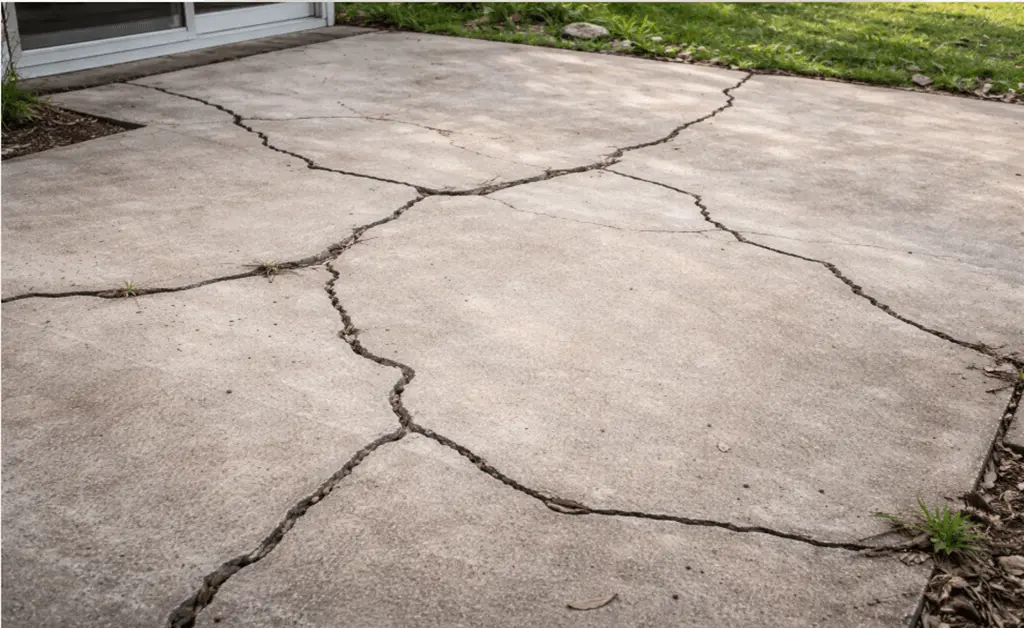
Small cracks on your patio rarely stay small. A cracked concrete patio often starts as a hairline mark near an edge, then widens after a season of rain, heat, and foot traffic. Understanding what causes this damage helps you decide whether a simple patch will hold or if the slab needs more attention.
This guide walks through the most common reasons patios crack, how to tell the difference between cosmetic damage and structural failure, and the repair steps homeowners can take before calling in help. By the end, you will know what your patio actually needs.
Common Reasons Your Concrete Patio Develops Cracks
Concrete is strong under pressure but weak against movement. Once the ground beneath a slab shifts, even slightly, stress builds along the weakest points. That stress shows up as cracks, and the reasons behind that movement usually fall into a few clear categories.
Soil Movement and Poor Base Preparation
Houston soil expands and contracts with moisture changes throughout the year. If a patio was poured without a properly compacted base, the slab has nothing solid to rest on. Over time this shifting soil pulls the concrete apart from underneath, creating cracks that run in irregular patterns across the surface.
Weather and Temperature Changes
Texas summers push concrete through repeated cycles of heat and rain. As the slab absorbs moisture, then dries and contracts, tiny stress fractures form. These fractures widen every time the pattern repeats, especially near patio edges and corners where the concrete has less support underneath it.
Age and Wear Over Time
Every concrete patio has a lifespan, and normal wear eventually catches up with even well built slabs. Years of foot traffic, furniture weight, and exposure to the elements gradually break down the surface. Older patios without control joints are especially prone to random cracking as the material fatigues over time.
How to Tell If a Cracked Concrete Patio Needs Repair or Replacement
Not every crack means the whole slab is done. Hairline cracks under an eighth of an inch wide are usually cosmetic and can be sealed to stop water intrusion. Wider cracks, uneven edges, or sections that rock underfoot point to a deeper structural issue underneath.
Pay attention to how the crack behaves over a few months. If it keeps growing, connects to other cracks, or causes one side of the slab to sit higher than the other, the patio has likely shifted enough that patching alone will not solve the problem long term.
A simple way to check the severity is to place a coin on edge over the crack. If it sits flush without wobbling and the gap is roughly hairline width, sealing the surface is often enough. If the coin rocks or the crack is wider than a pencil, plan on a deeper repair.
Steps to Fix Cracks in Your Concrete Patio
Cleaning and Preparing the Surface
Before any repair, the crack needs to be cleared of dirt, loose debris, and old sealant. A wire brush or pressure washer works well for this step. Removing debris allows the repair material to bond directly with the concrete instead of sitting on top of loose particles.
Filling and Sealing Cracks
Once the surface is clean and dry, a concrete crack filler or polyurethane sealant can be applied and smoothed level with the surrounding patio. This keeps water from seeping underneath and causing further soil erosion. Smaller, stable cracks often respond well to this type of repair.
When Professional Repair Makes Sense
Larger cracks, sunken sections, or patios with multiple problem areas usually call for more than a patch kit. Professional concrete repair services can assess whether resurfacing, slab jacking, or a full replacement will give the most lasting result, especially when the base beneath the patio has failed.
How Concrete Installation Quality Affects Long Term Durability
A patio poured with proper reinforcement, correct thickness, and adequate curing time resists cracking far better than one rushed through installation. Quality concrete installation depends on base preparation, control joint placement, and mix ratios suited to the local soil and climate, not shortcuts taken during the pour.
Homeowners planning a new pour benefit from working with concrete installation services that test soil conditions before laying the base. Reliable concrete construction services also include proper curing time, which reduces the chances of dealing with a cracked concrete patio a few years down the road.
Comparing Repair, Resurfacing, and Replacement Options
Repair works well for isolated cracks in an otherwise solid slab. Exterior concrete services like resurfacing can restore the look of a worn patio while covering minor surface damage, and it pairs well with decorative concrete solutions for homeowners who want a design upgrade at the same time.
Concrete replacement services remove the damaged slab entirely and rebuild the patio with a properly compacted base, which addresses the root cause instead of masking it. Resurfacing paired with concrete finishing services such as stamping or staining can also refresh a patio without a full rebuild.
Preventing Future Cracks in Your Patio
When to Call a Professional Concrete Contractor
Some cracks are simple weekend fixes, but others signal a patio that is settling unevenly or was never built on a solid base. A professional concrete contractor experienced in residential concrete services can inspect the slab, check the soil condition, and recommend whether repair, resurfacing, or replacement fits the situation best.
Getting an honest opinion early prevents small problems from turning into a full slab replacement later. Whether the project is a small patch or a full outdoor concrete service, working with an experienced local concrete company keeps the finished surface holding up against Houston weather for years to come.
Get Your Cracked Concrete Patio Fixed by JP Custom Concrete
A cracked concrete patio will not repair itself, and waiting usually means more soil erosion and a bigger job later. JP Custom Concrete inspects the slab, identifies whether the damage comes from soil movement, weather stress, or age, and recommends a fix that actually addresses the cause instead of covering it up.
Our team handles everything from small crack repair services to full concrete replacement services, decorative concrete solutions, and new concrete installation services for patios, walkways, and driveways across the Houston area. Every job includes proper base preparation and finishing work built to hold up against Texas weather, so the fix lasts instead of cracking again next season.
If your patio has cracks that keep spreading, sections that feel uneven underfoot, or an older slab that has never been resurfaced, call JP Custom Concrete at 713-391-4567 to schedule an inspection. A quick call now can save you from a much larger repair down the road.
GET YOUR FREE ESTIMATE