
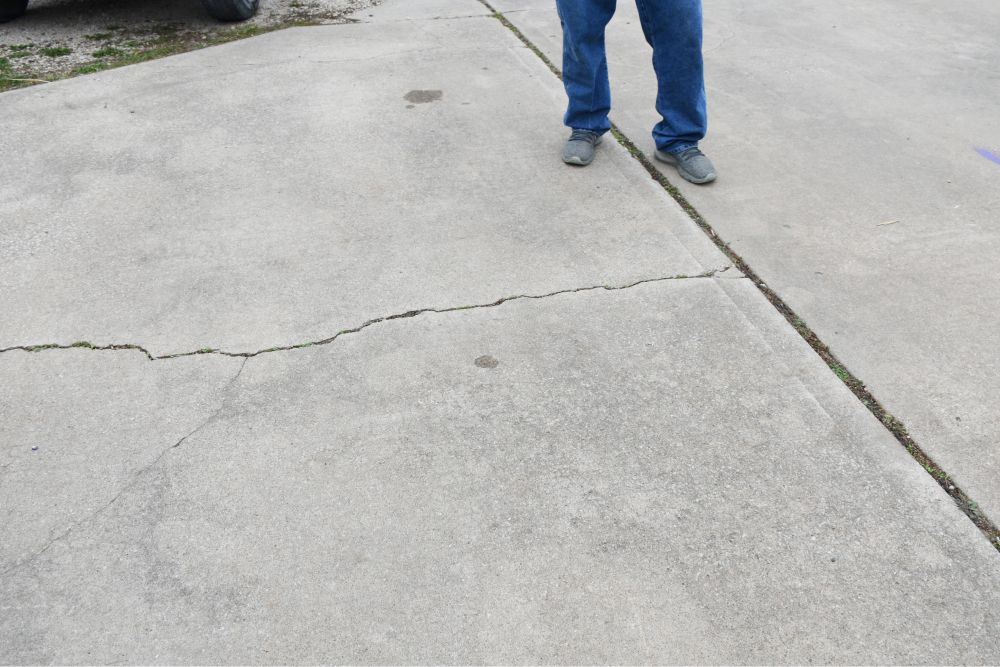
A concrete driveway takes a beating every day. Cars roll over it, sun bakes it, rain soaks it, and winter freezes it. Most homeowners do not notice the damage until it becomes hard to ignore. Catching the early warning signs can save you from a much bigger repair bill later.
This guide walks through the most common signs of driveway damage, what causes them, and when it is time to call in help.
Why Driveway Damage Rarely Stays Small
Concrete does not fail overnight. A small crack today can turn into a spreading network of cracks within a year. Moisture gets into the gaps, freezes, expands, and pushes the crack wider. This cycle repeats with every freeze-thaw season.
Soil settlement underneath the slab adds to the problem. As the ground shifts, the concrete above it loses even support. This is often what starts the chain reaction that ends in costly structural damage.
Cracks That Signal More Than Cosmetic Wear
Not every crack means trouble. But some patterns tell you the driveway needs attention now rather than later.
Hairline Cracks vs Structural Cracks
Hairline cracks are thin, shallow, and usually a normal part of concrete curing. They rarely need repair right away. Structural cracks are wider, often more than a quarter inch, and may run deep into the slab. These let water in and weaken the base over time.
If a crack has a noticeable gap or you can see it shifting between seasons, it has moved past cosmetic and into structural territory. That is the point where professional concrete driveway repair becomes worth scheduling.
What Causes Cracks to Spread
Heavy vehicle traffic puts repeated stress on weak points in the slab. Tree roots growing underneath can lift and crack sections from below. Foundation movement in the soil also plays a role, especially in areas with clay-heavy ground that expands and contracts with moisture levels.
Left alone, these cracks widen. Water seeps in, freezes, and forces the crack apart a little more each winter.
Uneven or Sunken Sections of the Driveway
A driveway that used to be flat but now has dips or raised edges is showing signs of soil settlement underneath. This creates an uneven surface that is not just an eyesore. It becomes a tripping hazard and a strain point every time a vehicle drives over it.
A sunken driveway section usually points to erosion or voids forming under the slab. Water washes soil away gradually, leaving empty space below the concrete. Without support, that section eventually cracks or breaks under weight.
Water Pooling and Drainage Problems
Surface Scaling and Spalling
Weather and Freeze-Thaw Wear
When a Small Fix Turns Into Full Resurfacing
How Timely Repairs Protect Property Value
When to Call a Professional
Final Thoughts
GET YOUR FREE ESTIMATE